
What it is
Tarping is a temporary cover over a damaged roof opening — missing shingles, a blown-off section, or a puncture — so rain does not keep pouring into the structure while a permanent repair is planned.

Emergency protection · emergency roof tarping near me
Get emergency roof tarping from Warm Home Inc — temporary storm protection to slow water intrusion until a permanent repair plan is ready. We cover the known opening, photograph what was protected, and keep the lasting repair as a separate step — not a same-night pressure close.
See the work
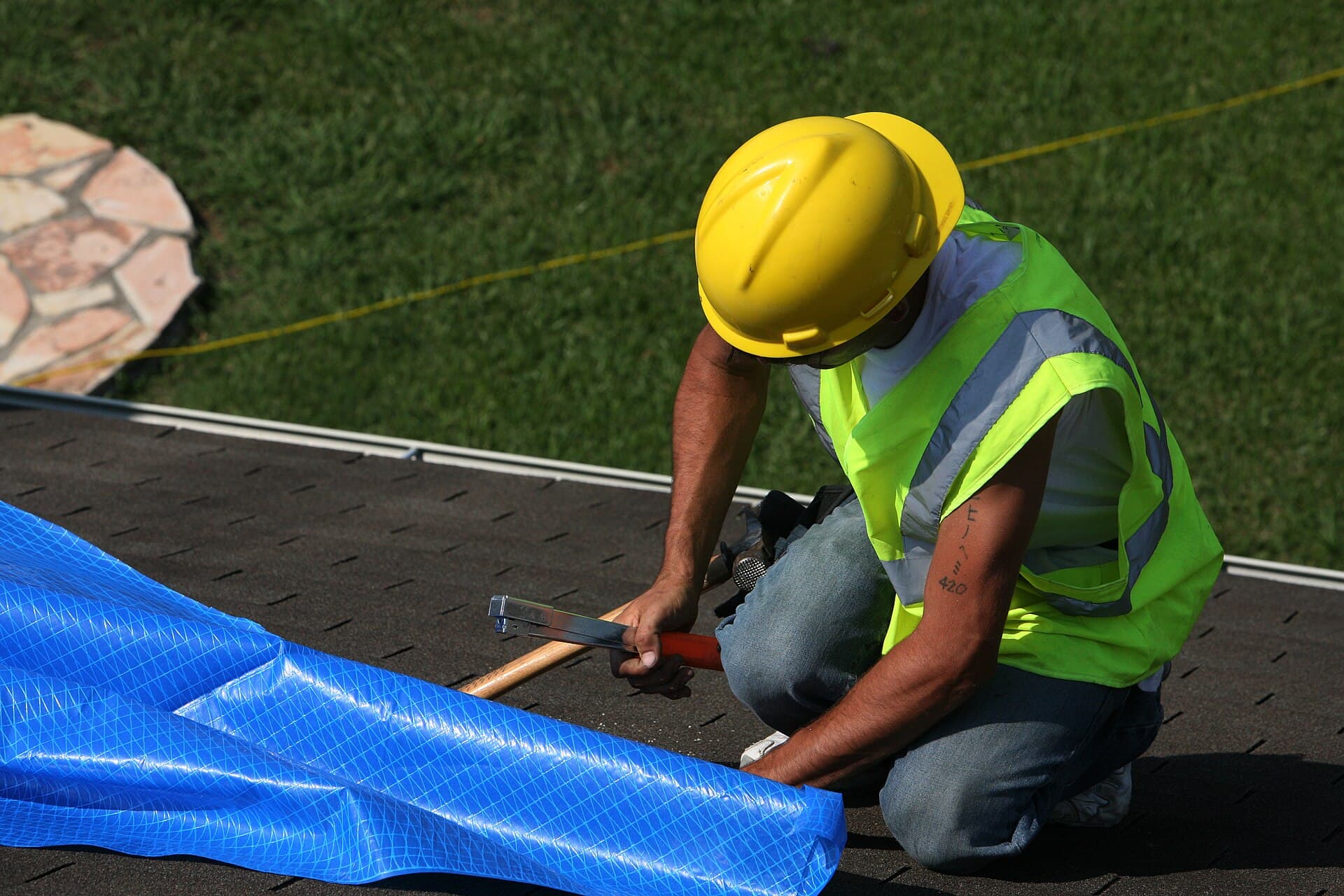
A Warm Home Inc crew covering the opening so water slows while a lasting repair plan is written.
This page only
Tarping is a temporary cover over a damaged roof opening — missing shingles, a blown-off section, or a puncture — so rain does not keep pouring into the structure while a permanent repair is planned.
Homeowners and property managers after wind, hail, or a sudden leak who need water slowed tonight, not a full replacement decision in the dark.
Open decks, torn underlayment, and storm holes that will soak insulation, ceilings, and belongings if they stay uncovered through the next band of rain.
Unique to tarping
This is a protection visit, not a full reroof. Safety and weather decide how far we can go in one trip.
“Storm damage roof tarping with proper installation to protect your property.”
Scope
Clear limits keep emergency work honest.
“Waterproof roof tarping for leak prevention and safer repairs.”
The usual emergency cover on a shingle roof: a reinforced tarp overlapped past the opening and fastened with battens or cap nails in the damaged zone. Fast when the deck can hold fasteners — still a temporary cover, not a new roof.
Heat-shrunk film that conforms around a stripped plane, an odd opening, or a larger hole where a loose tarp would billow. Tighter weather seal and more setup. It is still a stopgap until a lasting repair is written.
Weighted edges instead of nails — used on membrane, tile, or metal when puncturing sound roofing would do more harm, or when the deck is too weak to hold fasteners. Holds in calm weather; high wind can still move a weighted cover.
Timing
Move people and belongings away from the leak, catch water if it is safe, and do not climb a wet or missing roof yourself.
Missing shingles, a peeled underlayment, or a tree-torn hole should be covered before the next rain cycle when access is safe.
Insurance reviews, material lead times, and weather all take days. A tarp is the pause that keeps damage from spreading.
Next step
Tell us where the opening is, when the storm hit, and whether water is still coming in. The assessment is pre-set for tarping.
“Residential & commercial roof tarps—secure coverage that helps prevent leaks.”
Prefer to call?(844) 944-4666Straight answers
Arrival depends on weather, safety, access, and crew capacity in your published service area. Call for emergency tarping guidance after storm damage so we can give a realistic window — not a fake same-hour promise.
No. Tarping is temporary protection. It slows water while a lasting repair or replacement plan is written. Leaving a tarp up for months without a follow-up scope is not a finished job.
We fasten into the damaged zone and overlap sound areas without unnecessary extra punctures. If the deck is too weak to hold fasteners, we say so instead of forcing a cover that will fail.
The roof type, deck strength, and opening size decide it. Nailed-down is common on shingles that can take battens. Shrinkwrap is for larger or irregular openings that need a tighter wrap. Sandbag is for membrane, tile, or weak decks we should not puncture. None of these is a finished roof.
Not while wind or lightning makes the slope unsafe. We wait for a workable window. A tarp installed in a gale is a hazard, not a service.
We stand behind the installation.
Licensed General Contractor & InsuredCustomer reviews